Northern Link Express

Railway Scheme for Kwu Tung Station on the East Rail Line Authorised
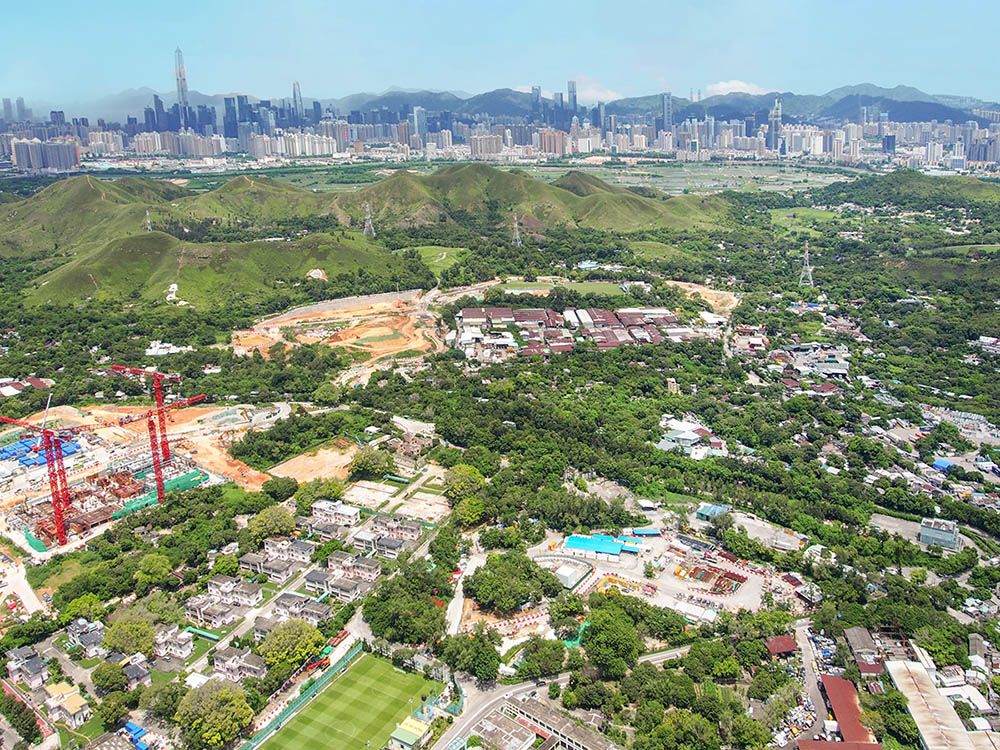
The MTR Corporation welcomes the Government’s authorisation of the addition of Kwu Tung Station under the Railways Ordinance (Cap. 519).
Learn more
The MTR Corporation welcomes the Government’s authorisation of the addition of Kwu Tung Station under the Railways Ordinance (Cap. 519).
Learn more

Drag to explore


Click here to view more
Vision of the Northern Link
The Northern Link will connect the East Rail Line and the Tuen Ma Line, providing communities along the alignment with efficient and environmentally friendly railway services, fostering the mobility of citizens within and outside the area and encouraging the exploration of the infinite possibilities of the Northwestern New Territories. As the major transport infrastructure facilitating the development of the Northern Metropolis, the Northern Link will serve the transport needs of the new development areas. It will also unleash the development potential of the land along its alignment, providing fresh impetus for the long-term development of the Northwestern New Territories and Hong Kong to keep the city moving sustainably. The Northern Link will open up exciting opportunities in living, housing, working, business and learning, driving sustainable growth for generations and advancing our concerted efforts in building a brighter future for Hong Kong.
Learn more

下載小冊子

Learn more
Development of the Northern Link
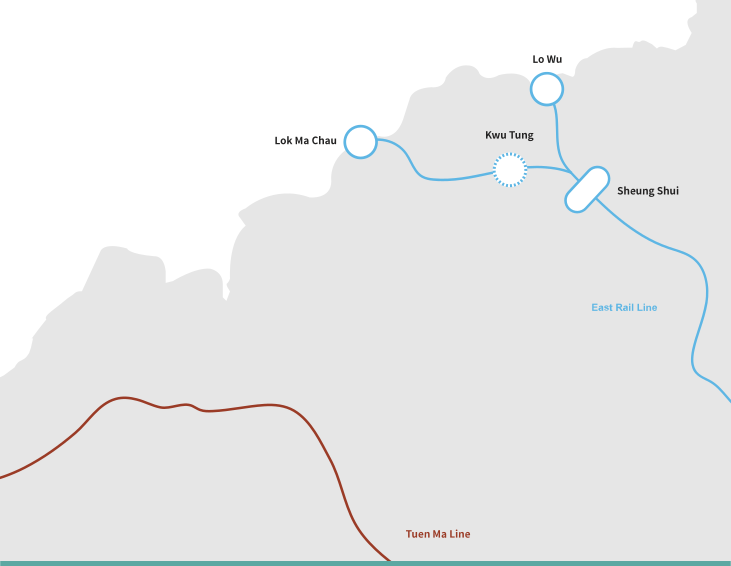
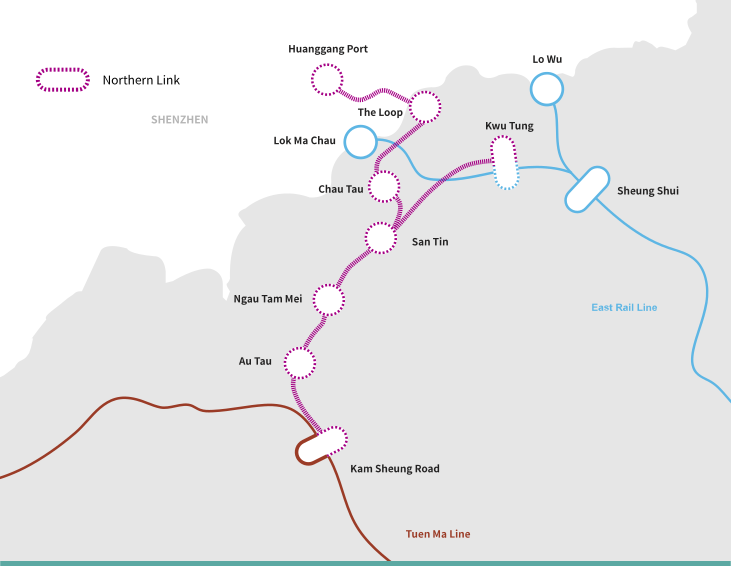
We are progressing with the Northern Link project at full speed. This includes the construction of Kwu Tung Station on the East Rail Line; the Northern Link Main Line between Kwu Tung and Kam Sheung Road stations, with three intermediate stations at San Tin, Ngau Tam Mei and Au Tau to connect the East Rail Line and the Tuen Ma Line; as well as the Northern Link Spur Line which connect San Tin Station to new Huanggang Port in Shenzhen via Chau Tau and The Loop stations.
Apart from building railway facilities that are familiar to the public, such as stations, tunnels and railway tracks, we will also plan, design and construct new ancillary facilities, expand existing railway facilities as well as carry out relevant enabling works in the vicinity of the alignment in accordance with statutory requirements, operational needs and railway development plans.
Despite the mega scale and complexity of the project, we attach great importance to every detail of the project delivery and will embed sustainability into each stage to create value for our stakeholders.
Learn more
Click the below buttons to see an introduction of these projects
1
East Rail Line – Kwu Tung Station
2
The Northern Link – Main Line
3
The Northern Link – Spur Line
Kwu Tung Station on the East Rail Line
Construction commenced in 2023 and is targeted for completion in 2027
Between Lok Ma Chau and Sheung Shui stations, Kwu Tung Station on the East Rail Line will be located at the junction of the existing Ma Tso Lung Road and Ho Sheung Heung Road, which is also the town centre of the future Kwu Tung North (KTN) New Development Area (NDA). The future Kwu Tung Station will be the public transport hub in the area, making it easier for existing and future residents living in the KTN NDA to take efficient, convenient and low-carbon railway services.
Note: The station names on the Northern Link are working titles only. All drawings and visuals are provided for concept illustration only, and the content is subject to change.
Learn more
The Northern Link – Main Line
Commence construction in 2025 for synchronised opening of both the Main Line and Spur Line by no later than 2034
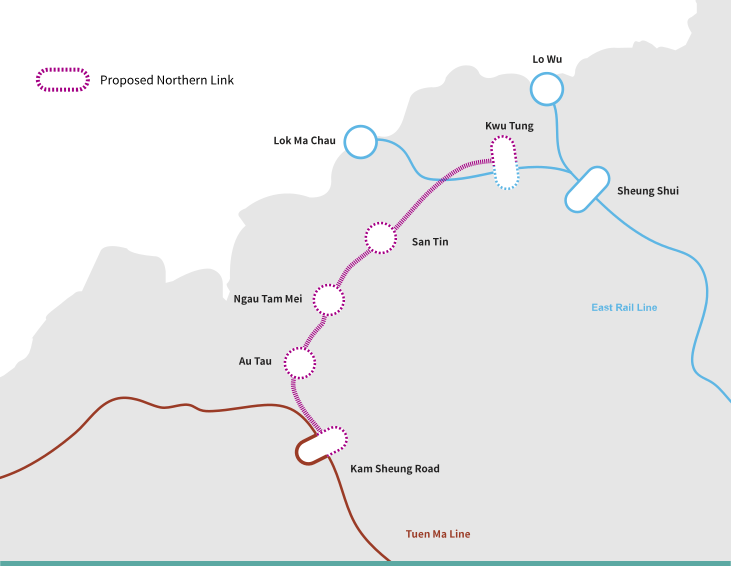
Connecting the East Rail Line and the Tuen Ma Line, the Northern Link Main Line will be built between Kwu Tung and Kam Sheung Road stations, with three intermediate stations at San Tin, Ngau Tam Mei and Au Tau. The Northern Link Main Line will form a railway loop in the Northern New Territories, enhancing the transport connectivity between the east and west of the New Territories. It will also unleash the development potential of the land along its alignment, fostering the long-term development of Hong Kong.
The Northern Link Main Line will adopt an underground railway alignment and underground station designs. Compared to the above-ground scheme option, running underground could provide more flexibility for the development of future communities in above-ground lands along the alignment, posing comparatively less and short-run impacts on the nearby ecology.
Note: The station names on the Northern Link are working titles only. All drawings and visuals are provided for concept illustration only, and the content is subject to change.
Learn more
The Northern Link – Spur Line
Target for the synchronised opening of both the Main Line and Spur Line by no later than 2034
The about 6.2km long Northern Link Spur Line runs from the San Tin Station on the Main Line, with Chau Tau and The Loop stations passing through the San Tin Technopole and the Hong Kong-Shenzhen Innovation and Technology Park, providing direct rail access to the new Huanggang Port in Shenzhen.
As Hong Kong’s third direct cross-boundary railway link, the Northern Link Spur Line will connect to the new Huanggang Port and link the metro networks of Hong Kong and Shenzhen, thereby deepening Hong Kong’s cross-boundary connections with the Mainland.
Note: The station names on the Northern Link are working titles only. All drawings and visuals are provided for concept illustration only, and the content is subject to change.
Learn more
Key Information
-

The Northern Link Main Line between Kwu Tung and Kam Sheung Road stations is
about 10.7km long
with three intermediate stations at San Tin, Ngau Tam Mei and Au Tau.
-

The Northern Link Spur Line between San Tin and Huanggang Port stations is
about 6.2km long
with 2 intermediate stations at Chau Tau and The Loop.
-
Journey time is approximately
12 minutes
between Kam Sheung Road and Kwu Tung stations.
(Road journey currently takes about 60 to 80 minutes during peak hours.)
Key Benefits
The Northern Link will connect the East Rail Line and the Tuen Ma Line, forming a railway loop and shortening journey times in the Northern New Territories. The Northern Link will also provide areas that rely on road transport with fast and convenient railway services, offering residents in the New Territories and passengers more route alternatives for travelling across districts. It will help divert railway passenger flow in the Northeastern New Territories and alleviate the existing road traffic pressure. In addition, the Northern Link will enhance cross-boundary population mobility, facilitating residents, particularly those living in the west of the New Territories, to use the cross-boundary train services on the East Rail Line to travel between Mainland China and Hong Kong.
-
The Northern Link Main Line between Kwu Tung and Kam Sheung Road stations is
about 10.7km long
with three intermediate stations at San Tin, Ngau Tam Mei and Au Tau.
-
The Northern Link Spur Line between San Tin and Huanggang Port stations is
about 6.2km long
with 2 intermediate stations at Chau Tau and The Loop.
-
Journey time is approximately
12 minutes
between Kam Sheung Road and Kwu Tung stations.
(Road journey currently takes about 60 to 80 minutes during peak hours.)
Powered by electricity, MTR trains are a means of low-carbon and environmentally friendly mass public transportation. On top of this, we will embed sustainability into every stage of the Northern Link project, including planning, design, construction, operations and maintenance. We will conduct an environmental impact assessment and incorporate sustainable features in the design and operation of the new stations, thereby supporting Hong Kong’s transition towards a carbon-neutral city. We will also utilise innovative technologies to deliver the project, for example, adopting Building Information Modelling (BIM), Design for Manufacture and Assembly (DfMA) and Modular Integrated Construction (MiC) to minimise operations on-site, enhancing the efficiency and quality of railway construction.
As the major transport infrastructure facilitating the development of the Northern Metropolis, the Northern Link supports the unleashing of the development potential of the land along its alignment. It stimulates housing supply and encourages business, leisure, tourism and other activities in the area, thereby driving local employment and economic development. Moreover, the developments enabled by the Northern Link will help provide residents with better supporting measures and facilities in education, medical care, shopping and social services, meeting the future communities’ needs for a better place to live and work.
Latest News
11 - 11 - 2022
MTR Welcomes the Authorisation of the Railway Scheme for Kwu Tung Station
The MTR Corporation welcomes the Government’s authorisation of the addition of Kwu Tung Station under the Railways Ordinance (Cap. 519).
Learn more
10 - 09 - 2022
Celebrating the Mid-Autumn Festival with the Northern Link – Riddles Series
Tying in with the Mid-Autumn Festival, the Northern Link (NOL) project team has taken part in various Mid-Autumn Festival celebrations at communities along the alignment. To further build up the festive fun, we tailor-made a special set of 10 lantern riddles related to NOL. While experienced in the tradition of cracking riddles, residents from local communities also discovered more fun facts and background information about the railway project.
Learn more
06 - 09 - 2022
Enjoying the festive joys and atmosphere of Mid-Autumn Festival with communities along the Northern Link
Leading up to the time celebrating the year’s bountiful harvest, the Northern Link (NOL) project team visited different communities along the NOL alignment to share and enjoy the festive season.
Learn more
03 - 06 - 2022
The Northern Link project team celebrates the Dragon Boat Festival with the Kwu Tung Community
The Northern Link project team participated in the Dragon Boat Festival event organised by the Kwu Tung Village Committee Office earlier to distribute anti-epidemic service bags and festive foods to the residents to share warmth and care with the Kwu Tung community.
Learn more
14 - 04 - 2022
Kwu Tung Station on the East Rail Line Gazetted
The MTR Corporation welcomes the Government‘s publication of the railway scheme for the Kwu Tung Station on the East Rail Line in the Gazette under the Railways Ordinance (Cap.519). The Corporation will fully support and fulfil the relevant statutory procedures to commence construction as scheduled next year.
Learn more
21 - 03 - 2022
Share Warmth during COVID and Celebrate the Kwun Yam Festival with the Kwu Tung Community
The MTR Corporation supported the Kwun Yam Festival Cum Care For The Elderly event organised by the Kwu Tung Village Committee Office earlier, delivering gift bags to the elderly in the Kwu Tung community. Each gift bag contains protective gear, daily necessities and a leaflet on the Northern Link project, facilitating the community’s further understanding of the project.
Learn more
15 - 02 - 2022
Follow #ConnectBeyondMobility to watch the latest videos now
Which areas will the Northern Link connect? Where exactly is Kwu Tung Station located? Watch the latest videos of the Northern Link project to learn more. We publish posts about the Northern Link project from time to time on social media platforms. Follow the hashtag #ConnectBeyondMobility on Instagram and Facebook to stay up-to-date with the latest news of the project!
Watch now
26 - 01 - 2022
The first round of publicity for the Northern Link project is launched!
In addition to the one-stop website for the Northern Link project, we have put up giant posters at Sheung Shui and Fanling stations and started distributing leaflets and posters to the community. We hope all these will make it easier and more convenient for you to learn more about the project and raise suggestions.
Learn more
18 - 09 - 2021
Celebrate the Mid-Autumn Festival with the Kwu Tung Community
To strengthen the connection with the Kwu Tung community, the MTR Corporation earlier supported a festive activity "Celebrating reunion and joy in Mid-Autumn" organised by the Kwu Tung Village Committee Office.
Learn more
15 - 07 - 2021
Planning and design of the Northern Link commences
The MTR Corporation announces that Arup AECOM Joint Venture has been awarded a design consultancy to kick start the planning and design for the Northern Link. The scope of the consultancy includes development of the scheme into an engineering design, preparation of the construction programme, gazette plans and project cost estimate, as well as liaison with government departments and other stakeholders. Other works, including ground investigation and surveys of existing utilities, are also commenced.
Learn more
22 - 04 - 2021
Planning and design of the Kwu Tung Station on the East Rail Line commences
The MTR Corporation announces that Ove Arup & Partners Hong Kong Limited has been awarded a design consultancy to carry out the planning and design of the Kwu Tung Station on the East Rail Line. The scope of the consultancy includes development of the scheme into an engineering design, preparation of the construction programme, gazette plans and project cost estimate, as well as liaison with government departments and other stakeholders. Other works, including ground investigation and surveys of existing utilities, were commenced.
Learn more


